Automotoplus Background
Voitour

Does Car Insurance Cover Theft in Switzerland? Types & Claims

Does car insurance cover theft in Switzerland? Learn what’s included, exclusions, and how theft protection really works in 2026.

Automotoplus - Does Car Insurance Cover Theft in Switzerland? Types & Claims

Introduction

The short answer is: it depends entirely on which type of insurance you hold. In Switzerland, car theft is not covered by the mandatory policy every driver is legally required to carry. It is only covered when you have chosen the right optional tier — and even then, the payout works differently from what most people expect.
This guide explains exactly how Swiss car insurance treats theft, what the claims process looks like, and where the most common gaps are that leave drivers underprotected.

What Type of Car Insurance Covers Theft?

With car theft in Switzerland rising sharply in recent years, AXA recorded nearly CHF 5 million in total theft damage in 2025 alone, almost double pre-pandemic figures, with an average cost of almost CHF 14,000 per theft. Knowing whether your policy actually covers theft is no longer a theoretical question.

Partial Casco (Teilkasko) and Car Theft Insurance

Partial casco is the foundation of car theft insurance in Switzerland. If your vehicle is stolen — whether it disappears entirely or is taken and later found damaged — partial casco is the policy tier that responds.
What partial casco specifically includes:
  • Complete vehicle theft (car taken and not recovered)
  • Vehicle recovered in a damaged state — repair costs are covered
  • Break-in damage: smashed windows, forced door locks, stripped ignition
  • Theft of factory-fitted parts — wheels, catalytic converters, factory navigation systems
  • Keyless entry theft, where criminals use relay devices to clone your key signal and unlock the vehicle without physical contact (more on this below)
When your insurer pays out for a stolen vehicle: Most Swiss insurers impose a waiting period of approximately 30 days before issuing a total theft payout. This is standard across the industry. The period exists because a significant share of stolen vehicles are recovered within the first few weeks, often stripped of parts, occasionally returned intact.
  • If your car is found undamaged within this window, no total loss payment is issued.
  • If it is found damaged, repair costs are covered under the partial casco.
  • If it is not found within the waiting period, you receive a settlement based on the vehicle's current market value at the time of theft, minus your deductible (franchise).
What partial casco does not cover: Collision damage you cause yourself, and personal belongings left inside the vehicle.

Full Casco (Vollkasko) and Wider Protection

Full casco includes everything in partial casco, including complete theft protection, and adds collision cover for damage you cause to your own vehicle.
For theft specifically, the practical difference between partial and full casco is not dramatic. Both tiers cover a stolen or broken-into vehicle. Where a full casco adds meaningful protection in theft-adjacent situations:
Damage during a theft attempt: If a thief tries to steal your car and fails but causes significant body damage in the process, such as forced ignition, a bent door frame, or a dashboard stripped of electronics. The partial casco covers this in most break-in scenarios. Full casco provides broader protection when the damage is more extensive or the circumstances are more complex.
New and leased vehicles: Swiss leasing companies require full casco as a condition of any lease agreement.
  • If a leased vehicle is stolen, the insurer pays the current market value to the leasing company, which is typically listed as a co-beneficiary on the policy.
  • If a gap exists between the payout and the remaining lease balance, known as GAP, that is a separate issue not covered by standard full casco. Confirm with your leasing company whether GAP cover is included or needs to be added separately.

Will Car Insurance Cover Theft of Personal Items?

The answer depends on which side of the coverage line you are looking at. Car insurance and household contents insurance treat personal belongings very differently in Switzerland. Understanding where one ends and the other begins is what determines whether you have a valid claim or an expensive gap.
For a full understanding, discover how car insurance in Switzerland works in our guide.

Does Car Insurance Cover Stolen Items Inside the Car?

This is one of the most frequent and costly surprises in Swiss car insurance: personal belongings stolen from your vehicle are not covered by any tier of car insurance, not by partial casco, not by full casco, and not by third-party liability.
Your laptop, sunglasses, work bag, cash, or sports equipment was left in the boot. None of it falls under auto insurance in Switzerland. This applies regardless of how comprehensive your casco policy is.
Why the exclusion exists: Swiss car insurance is designed to protect the vehicle itself. Personal belongings belong to a separate insurance category, household contents insurance (Hausratversicherung), not auto insurance.

One Narrow Exception

Some Swiss partial casco policies cover items that are permanently and factory-fitted to the vehicle, including an integrated navigation system, and a factory-installed dashcam. Aftermarket add-ons and portable personal items are excluded from almost all standard policies.

Does Home Insurance Cover Items Stolen from Your Vehicle?

Household contents insurance (Hausratversicherung) is where theft of personal belongings from your vehicle would fall, provided your policy explicitly includes "theft from vehicle" as a covered event. Not all household contents policies include this automatically, and the conditions attached to coverage vary significantly.
Common gaps Swiss drivers overlook:

1. Items left visible in the car

Many Swiss household contents insurers will deny or reduce claims for items left on seats in plain sight. Their position: leaving valuables visible contributed to the theft. Store items in the boot or out of sight.

2. High-value items

Laptops, cameras, and jewellery often carry sub-limits under household contents policies. If what was stolen is worth more than the sub-limit, you only receive a partial payout.

3. Overnight storage conditions

Some household contents policies only cover theft from a locked vehicle that has not been parked stationary in the same location for an extended period. Check the specific conditions in your policy.

4. Bicycles mounted externally

A bike on a roof or rear carrier is not inside the vehicle and is treated differently. A dedicated bicycle insurance add-on or a specific bicycle clause in your household contents policy is the right cover here.
If you are unsure whether your household contents insurance covers theft from your vehicle, reviewing both policies side by side is a smart step. AutoMotoPlus can help you identify gaps in your current Swiss coverage before they become expensive.

If My Car Is Stolen, Does Insurance Cover Full Value?

Not necessarily. This is where many drivers are caught off guard after a theft.

1. Calculation of a Theft Payout by Swiss Insurers

When a stolen vehicle is not recovered within the waiting period, the insurer pays out the current market value (Zeitwert) of the vehicle at the time of theft. This is not what you originally paid for the car. It is the depreciated market value — what a comparable vehicle in comparable condition would realistically sell for on the Swiss used car market on the date of theft.

Example

If you paid CHF 38,000 for your car three years ago and it is now worth CHF 24,000 on the used market, you receive CHF 24,000 minus your deductible. Not CHF 38,000.

2. Application of the Deductible

Your chosen deductible is subtracted from the theft settlement. If your partial casco carries a CHF 500 deductible and your vehicle is valued at CHF 24,000, you receive CHF 23,500.

3. Current Value Supplement

Some Swiss policies include a new value supplement for recent vehicles — typically cars under two to three years old. This tops up the payout closer to the cost of a comparable new replacement vehicle, rather than the straight depreciated value. If your car is relatively new, check whether your policy includes this feature. In a total theft scenario, the difference in payout can be several thousand francs.

4. Mandatory Police Reporting

Before any theft claim can be processed, a police report must be filed with the cantonal police (Kantonspolizei) as soon as the theft is discovered. Swiss insurers require the police report reference number before opening a claim file. Most insurers expect this to be done within 24 to 48 hours of discovering the vehicle is missing. Missing or delaying this step can give the insurer grounds to deny the claim.

Common Exclusions You Should Know in 2026

Swiss insurers are specific about the circumstances under which a theft claim can be reduced or denied. These exclusions catch more drivers than most people realise.

Keys Left Inside the Vehicle

If your car was taken with the keys in the ignition or left inside the car, most Swiss insurers will treat this as gross negligence. Under Article 14 of the Insurance Contract Act, the insurer may then reduce its payout in proportion to the degree of fault — unless your policy includes gross negligence cover.

Unlocked Vehicles

Evidence that your car was routinely left unlocked gives an insurer grounds to reduce or refuse a payout. The insurer's position is that you failed to take the basic precautions required under the policy.

Theft due to Negligence

This extends beyond keys and locks. Repeatedly parking in known high-risk locations without additional security, leaving windows partially open overnight, or failing to activate a factory-fitted alarm are all behaviours that can complicate a claim if the insurer investigates.

Theft in Unsecured or Misrepresented Parking Situations

Some Swiss policies ask about your regular overnight parking arrangement at inception — garage, covered car park, or street. If the circumstances at the time of the theft do not match what was declared, the insurer can flag this as a material misrepresentation.

Fraud Suspicion Cases

Swiss insurers routinely investigate theft claims, particularly for high-value vehicles. If the timeline, documentation, or circumstances are inconsistent, the insurer will delay payment while conducting its own investigation. Providing complete, accurate, and consistent documentation from the outset keeps the process moving efficiently.

Note

No casco insurance selected
The most fundamental exclusion of all: if you only hold third-party liability, no theft claim will be paid under any circumstances.

How Swiss Insurers Assess Car Theft Claims

The Swiss theft claims process is structured and methodical. Knowing the steps in advance keeps you from making avoidable mistakes under stress.

Step 1: Report to the police immediately

Contact the cantonal police (Kantonspolizei) as soon as you discover the vehicle is missing. You need the police report reference number to file an insurance claim. Most insurers require this within 24 to 48 hours.

Step 2: Notify your insurer the same day

Call or contact your insurer as soon as the police report is filed. Provide the report reference number, your policy number, and the circumstances of the theft. The insurer opens a claim file and assigns a claims handler.

Step 3: Submit required documentation

Standard documentation typically includes:
  • Police report reference number
  • All vehicle keys — both sets (this is standard Swiss practice)
  • Vehicle registration certificate (Fahrzeugausweis)
  • Purchase contract or proof of ownership
  • Recent mileage record and any service documentation
Handing over all keys is important and non-negotiable. It is part of how the insurer confirms the claim is legitimate. If you cannot produce all keys, expect the investigation to be extended.

Step 4: The waiting period

Most Swiss insurers hold the total theft settlement for approximately 30 days while the police investigation runs. If the vehicle is found undamaged within this period, no payout is made. If found damaged, repair costs are covered. If it is not recovered, the settlement process begins.

Step 5: Settlement

The insurer makes a settlement offer based on the current market value (Zeitwert). You have the right to contest the valuation if you believe it does not accurately reflect comparable vehicles on the Swiss market at that time.

Real Industry Insights: Car Theft Trends in Switzerland

Switzerland has one of the lower vehicle theft rates in Europe — but the nature of theft is changing, and those changes are shaping how Swiss insurers price casco policies in 2026.
Why urban areas see higher theft risks: According to AXA's 2025 claims data, Geneva, Vaud and Basel-Stadt are hit hardest, with Ticino also above average, while Obwalden and Glarus record the lowest rates. Higher population density, more public parking, and proximity to international border crossings all contribute. Vehicles stolen near the French, German, or Italian borders can be across the frontier within minutes — dramatically reducing recovery rates.

The Rise of Electronic Theft

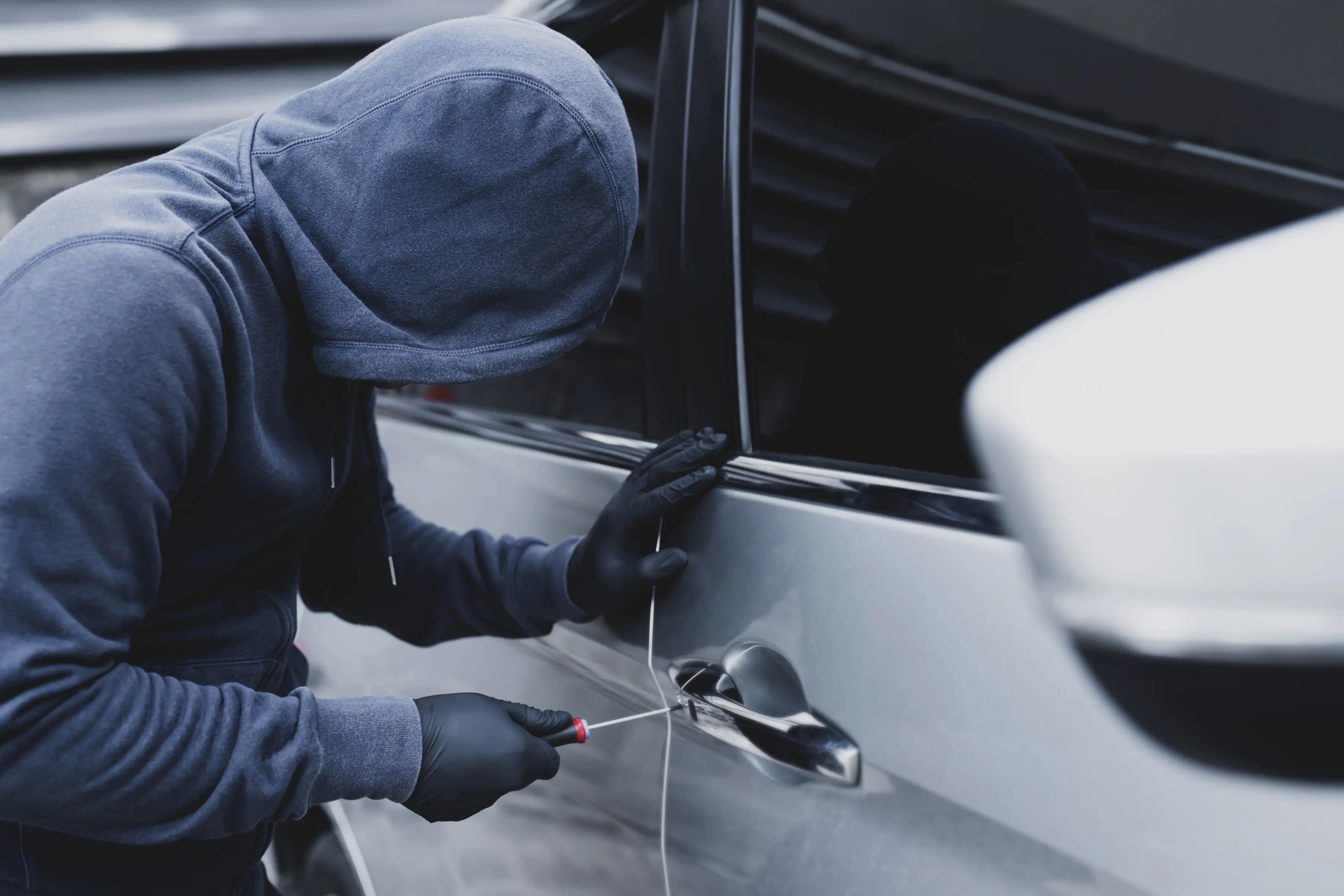
Relay attacks have become the dominant theft method for modern vehicles across Switzerland. In a relay attack, two criminals work together: one stands near your home and uses a device to amplify and capture your key fob's signal through walls or doors. The second stands at the vehicle with a relay receiver. The car reads the amplified signal, unlocks, and the engine starts, all without the key ever leaving your home. The vehicle can be gone in under 60 seconds, with no broken glass, no forced entry, and no physical trace.
Vehicles most frequently targeted in relay attacks include premium German brands (BMW, Mercedes-Benz, Audi), Volkswagen Group vehicles, and newer Tesla models. Keys stored near front doors or in hallways are particularly at risk. In AXA's 2025 claims data, Land Rover (more than four times the Swiss average), Alfa Romeo (three times) and Porsche (more than twice) were the brands most likely to be stolen.

How Insurers are Adjusting Premiums in 2026

Swiss insurers have updated their risk models to reflect growing electronic theft exposure. Factors increasingly influencing partial casco pricing now include:
  • The vehicle's make and model (based on historical theft frequency by vehicle type)
  • Primary overnight parking location (garaged vs. street)
  • Suitable additional security devices
This is a material shift from older models that focused primarily on vehicle value and driver age.

Prevention Becoming Part of Insurance Pricing

Several Swiss insurers now offer documented premium discounts for vehicles fitted with certified GPS trackers, OBD port locks, or signal-blocking key pouches. Discounts typically range from 5% to 15%, depending on the insurer and the device.
The direction is clear: Swiss insurers are increasingly willing to reward policyholders who actively reduce their own theft risk.

How to Improve Your Car Theft Protection

The right casco tier is the foundation — but what you do day to day has a direct impact on both your theft exposure and your annual premium.

Step 1: Choose the right casco level

If you only hold third-party liability, you have zero theft protection. For any vehicle under eight years old, partial casco is the minimum that makes sense. For vehicles under five years old, or any leased vehicle, full casco is the appropriate standard.

Step 2: Invest in a certified GPS tracker

GPS tracking devices allow Swiss police to recover stolen vehicles significantly faster. Several Swiss insurers recognise certified trackers with premium reductions. For high-value vehicles or models that are statistically targeted more frequently, a tracker is a straightforward and cost-effective investment.

Step 3: Use a visible steering wheel lock

Old-fashioned, yes — but effective against relay attacks specifically. A relay attack unlocks and starts the car electronically, but a visible physical lock creates a second barrier most opportunistic thieves will not bother with. Some Swiss insurer policy conditions explicitly reference visible deterrents.

Step 4: Store your keys in a signal-blocking pouch

A Faraday bag prevents your key fob's signal from being captured through walls. Available for under CHF 20 at most electronics retailers. A small, one-time investment that directly reduces your relay attack exposure.

Step 5: Fit an OBD port lock

Modern vehicles can be re-keyed using the On-Board Diagnostics (OBD) port with professional criminal equipment. An OBD lock physically blocks access to this port. Particularly relevant for high-value vehicles where professional theft networks specifically target the port.

Step 6: Review your parking arrangements

Overnight parking in a private garage reduces theft risk measurably and is factored into pricing models by some Swiss insurers. If you currently park on the street but have access to a garage, notify your insurer, it may reduce your casco premium.

When Car Insurance May NOT Cover Theft

To bring this together clearly, the specific circumstances where a Swiss car insurance policy will not respond to a theft claim:
  • No casco insurance selected: Third-party liability alone provides zero protection for vehicle theft. A stolen car means a total personal financial loss.
  • Unreported theft: If you do not file a police report — or report it significantly after the theft occurred — the insurer has legitimate grounds to deny the claim.
  • Fraud suspicion: Where the circumstances are inconsistent or documentation is incomplete, payment is withheld pending investigation. Confirmed fraud results in a denied claim and potential policy cancellation.
  • Keys left in the vehicle: Leaving the keys in the car counts as gross negligence, which entitles the insurer to reduce its payout in proportion to your fault (Art. 14 Insurance Contract Act) unless you have added gross negligence cover.
  • Contract limitations in basic liability: Some policies sold as "comprehensive" on non-Swiss platforms function only as third-party liability cover when examined against Swiss law.

Reminder

Always verify explicitly whether partial or full casco is included in what you are purchasing; never rely on a product name alone.

Get the Right Theft Coverage for Your Car

Theft cover is only as strong as the casco tier you actually hold — and what you think is covered and what is actually written into your policy are not always the same thing.
Before a theft happens, three things are worth verifying:
  • Whether you hold partial or full casco, and whether that tier is appropriate for your vehicle's current age and market value.
  • Whether your household contents insurance explicitly covers personal belongings stolen from your vehicle, and what the sub-limits are for high-value items.
  • Whether your policy includes gross negligence cover, so that a single momentary lapse does not result in a reduced or denied claim.
AutoMotoPlus lets you compare personalised quotes from trusted Swiss insurers based on your actual vehicle, driving history, and coverage needs, not just the cheapest headline premium. See real protection levels side by side, so you know exactly what you are paying for before you need it.
Automotoplus Background
Compare Swiss Car Insurance Options

Our expert team provides you with the comprehensive insurance solutions for your situations. We will help you review your policy yearly and assist with claim processes.

Author image

AutoMotoplus