Automotoplus Background
Voitour

Driving to Switzerland From France: Required Documents & Rules

Drive to Switzerland from France with confidence. Check 2026 border rules, vignette costs, documents, insurance, routes, and road laws.

Automotoplus - Driving to Switzerland From France: Required Documents & Rules

Can You Drive to Switzerland From France?

Yes. Private cars, motorcycles, motorhomes, and rental cars with cross-border approval can enter Switzerland from France. French and other EU/EFTA citizens can generally travel with a valid passport or national identity card. Other residents should check the rules for their nationality and French residence status.
French citizens can use a valid French driving licence for a short stay without an international permit, provided it covers the vehicle. Drivers using an international driving permit must also carry their original national licence.

Required Documents for Driving Through the Swiss Border

Check your identity documents, driving licence, registration, insurance, route, and motorway vignette before leaving. Switzerland is in the Schengen area but outside the EU Customs Union, so customs checks remain possible. France has also introduced temporary controls at its Swiss border from 1 May to 31 October 2026. Keep your documents within reach.

1. Passport or National Identity Card

French and most EU/EFTA citizens should carry a valid passport or national identity card. Children need their own accepted travel document.
Non-EU residents should carry their passport and French residence permit and check whether they need a visa. People entering for work or relocation should review Swiss permit rules. Carry physical documents rather than photos.

2. Driving Licence and Vehicle Registration

Bring your original driving licence and registration certificate. The licence category must match the vehicle, including heavier motorhomes or large trailers.
Drivers with a non-EU licence should check whether an international driving permit is required. This permit is only a translation and must be shown with the original licence.

3. Proof of Insurance

  • Ask your insurer to confirm that Switzerland is within the policy territory.
  • Carry its accepted proof of cover.
  • Check breakdown assistance, recovery to France, theft, collision damage, and whether trailers need separate protection.

Important Reminder

Do not assume that basic insurance provides the same level of support abroad. Recovery limits, replacement transport, legal assistance, and accident cover can vary between policies.

4. Rental-Car Permission

  • Tell the rental company that you plan to enter Switzerland.
  • Request written permission and confirm that the insurance and roadside assistance remain valid.
  • Check whether the car already has a Swiss vignette and who must buy one if it does not.
The EU’s Your Europe guidance advises travellers to notify the rental company before taking a hired vehicle between EU and non-EU countries such as France and Switzerland.

Swiss Road Rules French Drivers Should Know

Swiss traffic laws are strictly enforced. Posted signs always take priority, but the general limits are:
Built-up areas

General limit

50 km/h

Roads outside towns

General limit

80 km/h

Expressways

General limit

100 km/h

Motorways

General limit

120 km/h

Speed limits

Speeding may lead to fines, licence restrictions, or more serious penalties, depending on the offence.

Alcohol Limits

The general blood-alcohol limit is 0.5‰.
A lower limit of 0.1‰ applies to some drivers, including:
  • Learner drivers
  • Drivers with probationary licences
  • Professional drivers
The safest option is not to drink before driving.

Child Seats and Seat Belts

Children under 12 who are shorter than 150 cm must normally use an approved child restraint.
Children who are at least 150 cm tall, as well as passengers aged 12 or over, must wear a seat belt.

Mobile Phones and Navigation

Set your route before you start driving.
Avoid holding or using your phone while the vehicle is moving. Use a hands-free system where permitted, and interact with navigation tools only when it is safe to do so.

Junctions, Roundabouts, and Mountain Roads

At unsigned junctions, vehicles coming from the right may have priority.
Drivers should also take extra care when:
  • Entering or leaving roundabouts
  • Driving on narrow mountain roads
  • Passing oncoming vehicles on steep or restricted routes
  • Approaching pedestrian crossings

Parking in Swiss Cities

Read parking signs carefully before leaving your car.
Blue-zone parking may require a parking disc, while other spaces may use:
  • Parking meters
  • Mobile apps
  • Local permits
  • Time restrictions
Park-and-ride facilities can be a simpler option than driving into central Geneva, Lausanne, or Basel.

Do You Need a Vignette to Drive in Switzerland?

You need a Swiss motorway vignette when using covered motorways and expressways. It applies to cars, motorcycles, trailers, caravans, vans, and motorhomes weighing up to 3.5 tonnes.
The 2026 vignette costs CHF 40 and is valid from 1 December 2025 to 31 January 2027. Switzerland does not sell daily, weekly, or monthly versions. Drivers can choose a physical sticker or an e-vignette linked to the registration number.
Driving on a covered road without one can lead to a CHF 200 fine. You must also buy the CHF 40 vignette.

Where Can You Buy the Swiss Vignette?

Buy the e-vignette through the official Swiss Via portal. Physical stickers are sold at border customs posts, Swiss petrol stations, post offices, and selected points outside Switzerland.
Avoid unofficial websites that add service or booking charges. The official price remains CHF 40.

Can You Enter Switzerland Without a Vignette?

Yes. A vignette is not required just to cross the border. You need it only on covered motorways and expressways.
Local roads may help you avoid it, but the trip can be slower and more complex. For Geneva, the answer depends on your route: local-road crossings may not require a vignette, while motorway routes do.

What Are the Best Routes From France to Switzerland?

Lyon or Annecy

Destination

Geneva

Best for

Short city trips

What to check

Commuter and airport traffic

Dijon or Besançon

Destination

Lausanne or Neuchâtel

Best for

Western Switzerland

What to check

Fog, snow, and ice

Strasbourg or Mulhouse

Destination

Basel

Best for

Northern Switzerland

What to check

Urban congestion

Chamonix

Destination

Martigny or Valais

Best for

Alpine trips

What to check

Snow and closures

Paris

Destination

Geneva, Lausanne, or Basel

Best for

Longer journeys

What to check

Tolls and rest stops

The best routes to drive from France to Switzerland
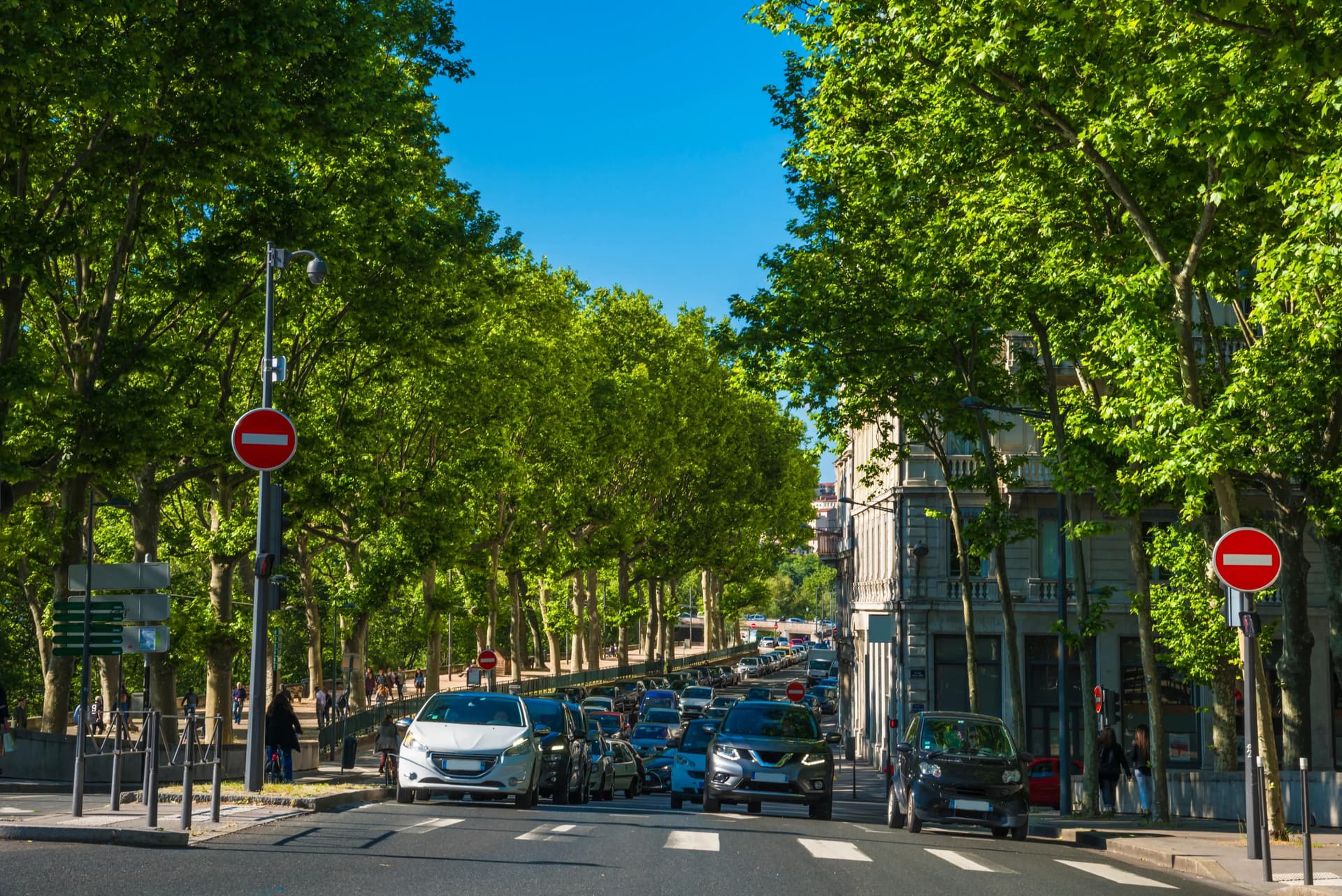
  • The Lyon or Annecy route is popular for Geneva Airport and short visits but becomes busy during commuter periods.
  • Dijon or Besançon routes cross the Jura, where winter weather can slow the journey.
  • Strasbourg or Mulhouse offers easy access to Basel, though city traffic requires planning.
From Chamonix toward Valais, check live road reports, closures, and snow-chain requirements. Weather and roadworks matter more than a fixed estimated journey time. Official Swiss guidance recommends checking current road conditions before travelling.
Lyon/street view with traffic

Lyon/street view with traffic

What Must You Declare at Swiss Customs?

Goods for personal use or gifts may generally enter VAT-free when their total value does not exceed CHF 150 per person per day. If the limit is exceeded, Swiss VAT may apply to the full value, not only the amount above CHF 150.
Food, alcohol, and tobacco have separate quantity allowances. Animals and restricted goods may require documents. The official QuickZoll app lets travellers declare eligible private goods and pay charges before crossing.
Repairs or maintenance carried out abroad on a Swiss-registered private car can also count toward the customs value.
Food

What to check

Quantity limits and product restrictions

Alcohol

What to check

Age and duty-free allowances

Tobacco

What to check

Age and quantity allowances

Pets

What to check

Identification, vaccines, and entry papers

Goods custom

Moving to Switzerland involves different rules for household goods and permanent vehicle import. You may also need Swiss registration, plates, and insurance. See our guide to how to buy a car in Switzerland for the wider ownership process.

Does French Car Insurance Cover Switzerland?

It may, but coverage depends on your insurer and policy.
Before driving to Switzerland, check:
  • Whether Switzerland is included in your policy area
  • How long your cover remains valid abroad
  • Which drivers are authorised
  • Whether the vehicle owner must be present
  • What roadside assistance is included
  • Whether recovery to France is covered
You should also review protection for:
  • Third-party liability
  • Collision damage
  • Theft
  • Windscreen damage
  • Natural hazards
  • Replacement transport
  • Legal expenses
  • Personal belongings

What Changes If You Move to Switzerland?

A short holiday in a French-registered car is different from living in Switzerland.
After moving, you may need to:
  • Declare the vehicle at customs
  • Register it in Switzerland
  • Obtain Swiss number plates
  • Arrange mandatory Swiss liability insurance
  • Compare partial casco and full casco cover
The right level of coverage depends on the car’s value, age, use, and finance terms.
Automotoplus Background
Get Expert Guidance Before Driving in Switzerland

AutoMotoPlus provides personalised consultations to help you understand key Swiss driving requirements, review your insurance needs, and choose the right level of coverage for your vehicle.

Can You Drive an Electric Car From France to Switzerland?

Yes. Electric cars can travel easily between France and Switzerland, but planning your charging stops before departure is important.
Before your trip:
  • Check charger locations along your route.
  • Confirm that the connectors are compatible with your car.
  • Compare roaming fees and charging prices.
  • Download any required charging apps.
  • Check whether stations accept contactless or card payments.
Cold weather and steep mountain roads can reduce your driving range. Keep enough battery power in reserve and avoid relying on a single charging station, especially in remote or Alpine areas.
When possible, choose a hotel or other accommodation with an EV charger. You should also confirm whether your roadside assistance covers recovery if the battery runs out.

Checklist Before Driving to Switzerland

  • Passport or accepted identity card
  • Driving licence and vehicle registration
  • Proof of insurance
  • Rental-car permission, when required
  • Swiss vignette for motorway use
  • Fuel or charging plan
  • Roadside-assistance details
  • Suitable tyres and snow equipment
  • Customs declaration, when needed
  • Parking plan and offline navigation
  • Payment card or Swiss francs
  • Live traffic and weather check

FAQ

Yes. Driving into Switzerland from France is usually easy when your documents, insurance, route, and vignette are ready. Expect strict speed enforcement and possible border or customs checks.

Not always. Many drivers pass without stopping, but identity and customs checks may take place. Temporary French controls run from 1 May to 31 October 2026.

Usually, yes. Get the rental company’s approval and check its cross-border insurance, assistance, fees, and vignette terms.

There is no general national requirement. However, the vehicle must remain safe and controllable. Insurance benefits may be reduced when unsuitable tyres contribute to an accident. Swiss authorities recommend using winter tyres between October and Easter.

Drive to Switzerland With Confidence

It is generally easy to drive to Switzerland from France when you prepare the right documents, insurance, route, and motorway vignette in advance. You should also check Swiss speed limits, customs rules, parking requirements, and seasonal road conditions before departure.
Your insurance needs may change if you plan to stay longer, move to Switzerland, or register your vehicle there. AutoMotoPlus can guide you through Swiss driving and insurance requirements, explain the available coverage options, and help you choose suitable liability, partial casco, or full casco protection.
Contact AutoMotoPlus for a free, non-binding consultation before driving or relocating to Switzerland.
Author image

AutoMotoplus

Driving to Switzerland From France: Required Documents & Rules