Automotoplus Background
Moto

How Much Is Motorbike Insurance in Switzerland? Cost Breakdown (2026)

Find out how much motorbike insurance costs in Switzerland: 2026 price ranges, and how to pay less as a Swiss rider.

Automotoplus - How Much Is Motorbike Insurance in Switzerland? Cost Breakdown (2026)

Introduction

Switzerland's Alpine passes, mountain roads, and scenic lakeside routes make it one of the most appealing countries in Europe to ride a motorbike. Before any Swiss rider takes to the road, one thing is non-negotiable: insurance.
Motorbike insurance is mandatory before you can register and plate any two-wheeled vehicle. That applies to scooters, mopeds, and high-performance bikes alike. The cost varies significantly. Coverage tier, engine size, rider age, claims history, and seasonal use all affect what you pay.
This guide explains what motorbike insurance in Switzerland costs in 2026. It outlines what each coverage type includes, and how to pay less without cutting important protection.

Is Motorbike Insurance Mandatory in Switzerland?

Yes. Third-party liability insurance (Haftpflichtversicherung) is required by Swiss law for every registered motorcycle, scooter, moped, and quad bike. No insurance means no registration. You cannot legally put a Swiss licence plate on a motorcycle without proof of active cover.
This requirement is set out in the Swiss Road Traffic Act (SVG), which governs all road vehicles in Switzerland. The mandatory minimum insures other people against damage and injury you cause. It does not cover your own bike at all.

The Minimum Insured Amount

CHF 100 million per incident.
The amount is set by federal law, identical to the minimum for car liability, and one of the highest legal minimums in Europe.
If you ride uninsured, the vehicle can be seized and the plates confiscated by the cantonal road traffic authority. You carry full personal liability for any damage caused, with no cap and no insurer behind you.

The Three Types of Motorbike Insurance in Switzerland

Swiss motorcycle insurance uses the same three-tier structure as car insurance. One tier is mandatory. Two are optional but widely used. The diagram above maps exactly to this section.

1. Third-Party Liability (Haftpflicht): The Legal Minimum

Third-party liability covers damage and injury you cause to others. That includes pedestrians, passengers in other vehicles, other motorcycles, and third-party property.
It does not cover your own bike, your own clothing, or your own medical costs. For that, you need casco cover.
The law requires cover of at least CHF 5 million per event (Motor Vehicle Insurance Ordinance, VVV/OAV). In practice, Swiss insurers typically insure up to CHF 100 million per incident. Every Swiss motorcyclist must carry liability cover. Every other tier is in addition to it — never instead of it.

2. Partial Casco (Teilkasko): Your Bike's Own Protection

Partial casco is an optional cover that protects your motorcycle from events beyond your control. It typically covers:
  • Theft and attempted theft
  • Fire and explosions
  • Hail, flooding, and natural hazards
  • Glass damage
  • Animal collisions, including wild game strikes
  • Rodent damage to cables and wiring
It does not cover collision damage you cause yourself. That requires a full casco. A partial casco is worth considering for any bike that still holds meaningful market value.

3. Full Casco (Vollkasko): Maximum Protection

Full casco combines partial casco with the collision damage you cause yourself. It adds three key extras:
  • Own-fault accident damage is covered even when the accident is your fault
  • Parking damage from unknown third parties is often available as an add-on
  • Motorcycle clothing cover is included in many full casco policies
It carries the highest premium of the three tiers. It is generally recommended for bikes under 5 years old or with a purchase price above CHF 8,000–10,000.

One Important Note

For leased motorcycles, the full casco is typically mandatory under the lease agreement.

How Much Does Motorbike Insurance Cost in Switzerland? (2026 Ranges)

Indicative annual premium ranges for Swiss motorbike insurance in 2026:
50cc scooter / moped

Coverage

Liability only

Indicative annual cost

CHF 100–200/year

125cc scooter

Coverage

Liability only

Indicative annual cost

CHF 150–280/year

Mid-size 300–600cc

Coverage

Liability only

Indicative annual cost

CHF 200–400/year

Mid-size 300–600cc

Coverage

Liability + partial casco

Indicative annual cost

CHF 300–550/year

Large 800–1200cc

Coverage

Liability only

Indicative annual cost

CHF 300–550/year

Large 800–1200cc

Coverage

Full casco (new bike)

Indicative annual cost

CHF 500–1,000+/year

Source: Indicative 2026 ranges based on Swiss market data.

Key benchmark: most Swiss riders insuring a mid-size motorcycle with liability plus partial casco pay somewhere between CHF 25 and CHF 50 per month, or CHF 300–600 annually. High-performance bikes with full casco can push well above that.

Important Note for Young Riders

Riders under 25, or those who have held a licence for fewer than 3 years, face an additional excess of CHF 1,000 on liability and collision claims on top of the standard deductible. This does not increase the base premium, but it increases the out-of-pocket cost at claim time, a meaningful difference when evaluating coverage.
Discover all motorbike insurance options to see what your specific bike and profile costs across Swiss insurers.

What Affects the Cost of Motorbike Insurance in Switzerland?

No two motorbike insurance quotes are identical. These are the variables that explain most of the difference.

1. Engine Size and Bike Value

The cubic capacity (cc) of the engine is one of the first rating factors every Swiss insurer uses. A 50cc scooter sits in an entirely different risk and price bracket from a 1,200cc touring bike.
For partial and full casco, the market value of the bike also feeds directly into the premium. A more valuable bike costs more to insure against theft or damage.

2. Rider Age and Licence History

Riders under 25 are statistically at a higher risk and pay higher premiums. Some Swiss insurers add an age surcharge on top of the standard rating. New licence holders with fewer than 3 years of riding history face similar uplifts, regardless of age.

3. Bonus-Malus and Claims History

Most Swiss motorcycle insurers use a bonus-malus system. Each claim-free year earns you a premium reduction, the bonus. Make a claim and your premium rises the following year, the malus.
A rider with 5+ clean years can achieve meaningful discounts below the base rate. A recent at-fault claim can push premiums up for 3–5 years.
Some Swiss insurers offer bonus protection as an add-on: one claim per year does not affect your bonus level.

4. Coverage Level and Deductible Choice

Moving from liability-only to partial or full casco adds cost, but also adds meaningful protection for anything but the oldest, lowest-value bikes.
Choosing a higher deductible (Selbstbehalt / franchise) reduces the annual premium. This is a practical option for experienced riders with a strong claims record.

The Winter Discount: Pay Less for Swiss Motorbike Insurance

This is one of the most Switzerland-specific features of motorbike insurance, and one of the most underused by riders who are new to the Swiss market.
In Switzerland, motorcyclists who do not ride in winter can deposit their licence plates with the cantonal road traffic office. The bike is then removed from active road use. Most Swiss insurers apply a seasonal discount on the premium for those months.
Not all insurers require you to physically hand in the plates. Zurich Insurance allows seasonal riders to suspend road use without surrendering them. It is worth checking this point when comparing providers.

Practical Saving

A rider who deposits plates from November to March (5 months) can typically reduce the annual premium by 30–40% for that period, making the seasonal discount one of the highest-impact cost controls available to Swiss motorcyclists.
The basic partial casco cover (theft, fire, natural hazards) generally remains active during the suspension period. Your bike in the garage is still protected.

What Optional Add-Ons Are Worth Adding?

Beyond the three main tiers, Swiss motorbike insurers offer several add-ons. Not all are necessary for every rider — but some earn their cost clearly.
Worth considering for most riders:
  • Bonus protection prevents one at-fault claim per year from wiping out your accumulated discount. Cost-effective once you have built 3+ claim-free years
  • Motorcycle clothing covers your helmet, leathers, boots, and gloves if damaged in an insured incident.
  • Passenger accident insurance is recommended if you regularly carry passengers who are not covered by Swiss employer accident insurance (SUVA). Non-residents and tourists may have no coverage at all.

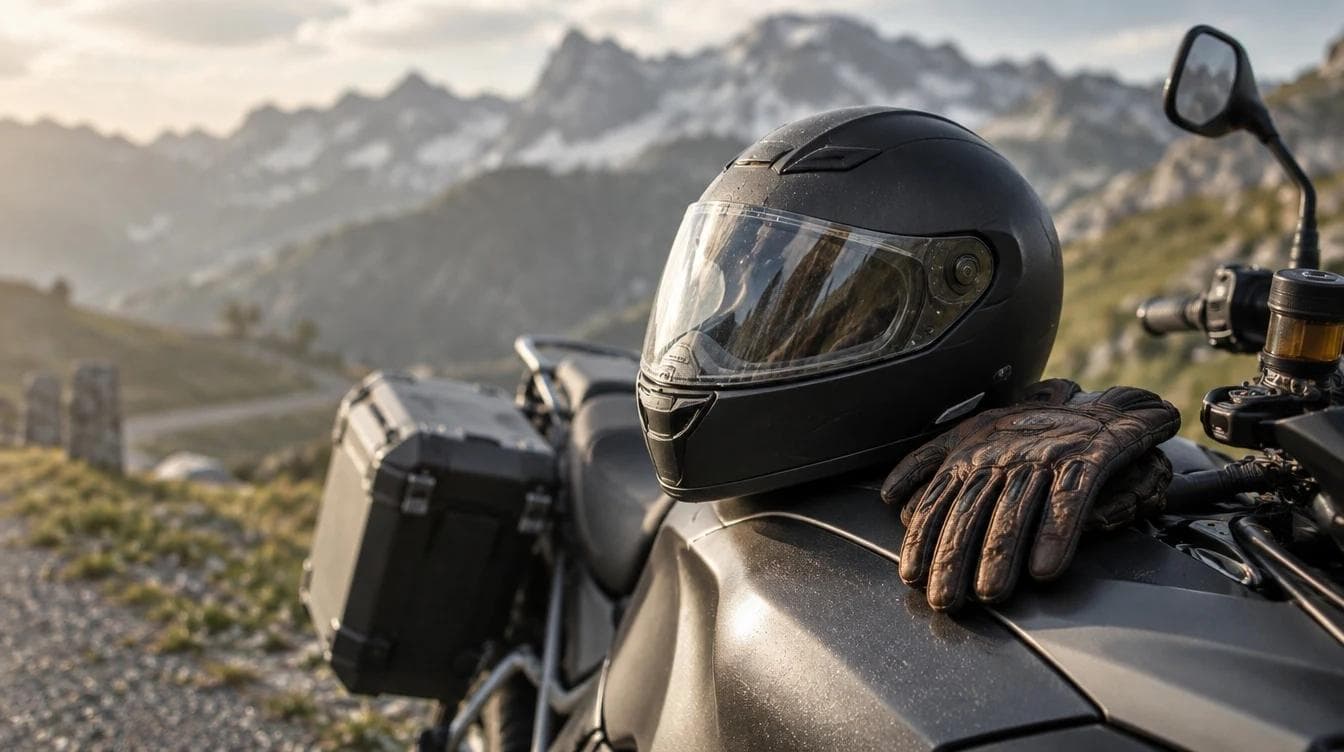
Examples of motorbike clothing

  • Allianz covers up to CHF 4,000 in clothing value
  • Helvetia covers personal belongings carried on the bike up to CHF 5,000
Given the cost of quality riding gear, this add-on has a strong value case
Situational add-ons:
  • Replacement bike covers hire costs while your bike is in for repair. Useful for daily commuters who depend on two wheels to get to work
  • Parking damage covers scratches and dents from unknown third parties while the bike is stationary. For example, Zurich covers up to CHF 1,000 per event, twice per calendar year.

How to Pay Less for Motorbike Insurance in Switzerland

The premium is set at underwriting, but several decisions within your control affect the final number. Five effective ways to reduce your motorbike insurance premium in Switzerland:

1. Apply for the Seasonal Discount

Deposit your plates during the months you do not ride. A 5-month suspension typically saves 30–40% on the premium for that period.

2. Match Coverage to the Bike's Age

A full casco for a 10-year-old, low-value bike is rarely financially justified. Switch to liability-only or partial casco as the bike depreciates.

3. Choose a Higher Deductible

A rider with a strong claims record can accept a CHF 500 or CHF 1,000 deductible in exchange for a lower annual premium.

4. Protect and Grow Your Bonus

Avoid making small casco claims. If the claim amount is less than the long-term malus impact on your premium, paying out of pocket is a better value.

5. Compare across Swiss Insurers

Premiums for identical coverage and the same bike vary meaningfully between Zurich, Helvetia, Allianz, Baloise, AXA, Mobiliar, and Generali.
An expert broker, like AutoMotoplus, compares multiple providers and finds the best price as well as risk classification for your specific profile.
To maximize your savings, check out AutoMotoplus's guide on how to lower your Swiss motorbike insurance premiums.

Conclusion

Motorbike insurance in Switzerland is mandatory and structured. But it is also very responsive to the decisions you make. Coverage tier, seasonal use, deductible, and insurer choice all move the number. The difference between the cheapest and most expensive quote for the same bike can reach hundreds of francs per year.
The right coverage depends on your bike's age, how you ride, and your claims history.
Automotoplus Background
Find the Right Coverage for Your Motorbike

AutoMotoPlus connects Swiss riders with trusted insurance partners. Compare personalised quotes in minutes, without the paperwork.

Author image

AutoMotoplus

How Much Is Motorbike Insurance in Switzerland? Cost Breakdown (2026)