Furka Pass is often considered the best driving road in Switzerland. It combines sharp Alpine bends, glacier views, historic landmarks, and links to the Grimsel and Susten passes. However, the right route depends on your experience, travel season, and preferred scenery.
Switzerland also offers cobbled passes, lake roads, and vineyard routes. This guide compares ten famous roads in Switzerland and covers planning, safety, and insurance.
What Are the 10 Best Driving Roads in Switzerland?
Each route offers a different experience. Check out the 10 best driving roads in Switzerland to find one that matches your ability and travel plans.
1. Furka Pass: The Best Overall Driving Road
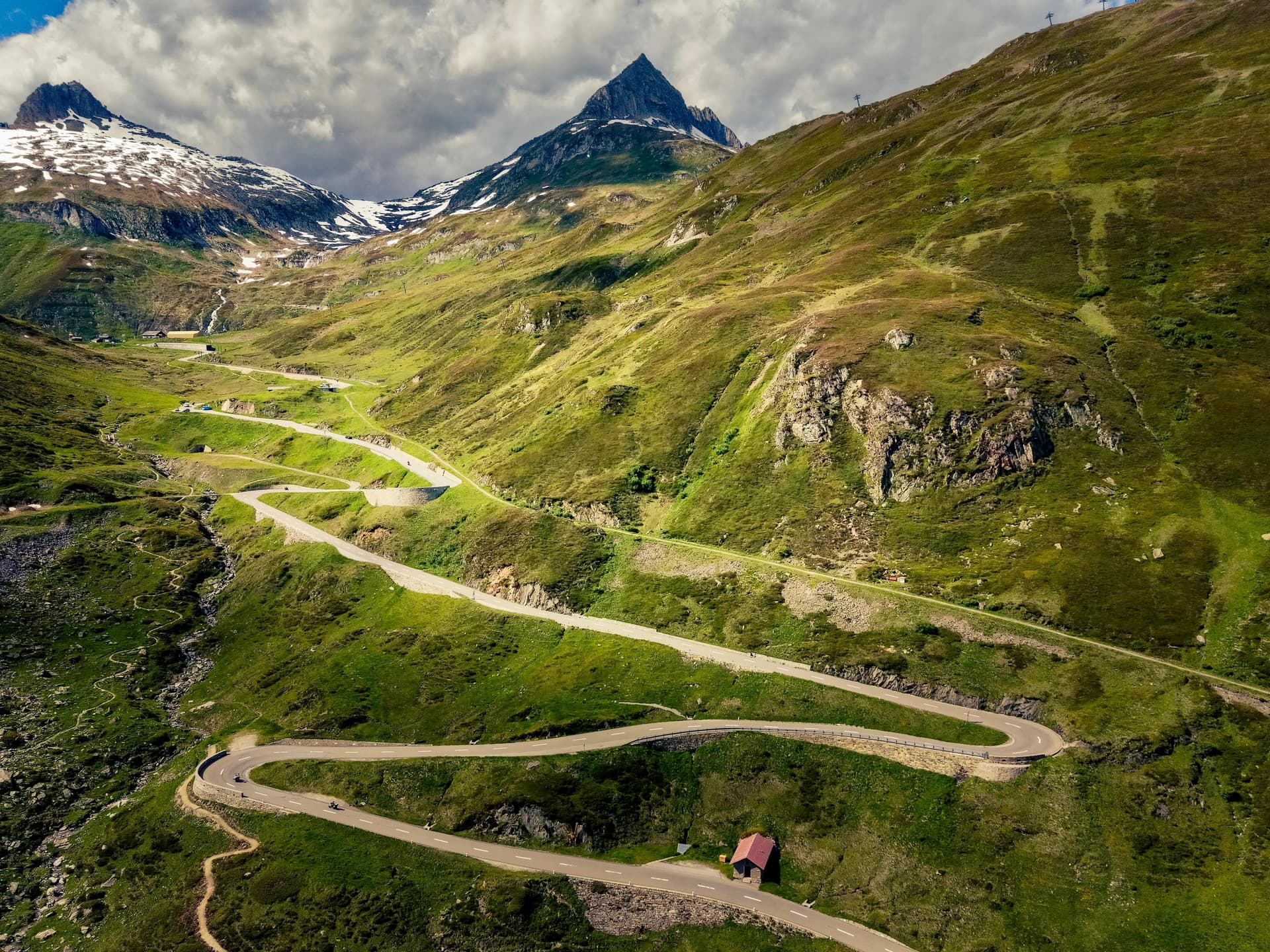
Furka Pass connects Realp in Uri with Oberwald in Valais. At about 2,429 metres, its bends reveal the Rhône Glacier and Hotel Belvédère. The road appeared in Goldfinger and links well with Grimsel and Susten. It usually opens from June to October, depending on snow. Switzerland Tourism recommends checking conditions first.
Furka pass
2. Tremola Road: The Best Historic Drive
Tremola climbs from Airolo to the Gotthard Pass over granite cobbles and 24 hairpins. Driving south to north gives a clear view above the valley. A 3.5-tonne limit applies. The cobbles offer less wet grip, so slow down or use the modern pass road.
3. Grimsel Pass: Best for Lakes and Granite Peaks
Grimsel Pass runs between Innertkirchen and Gletsch. Wooded valleys lead to granite, reservoirs, and waterfalls. Highlights include Räterichsboden Lake, Grimsel Lake, and Totensee. Visibility changes quickly in fog. The pass usually opens from June to October and meets Furka at Gletsch.
4. Susten Pass: Best for a Complete Alpine Drive
Susten Pass connects Innertkirchen with Wassen through glaciers, stone bridges, tunnels, and valleys. Some sections are narrow, and summer weekends bring mixed traffic. Start early. Experienced drivers can combine Susten, Furka, and Grimsel in a demanding three-pass loop.
5. Klausen Pass: Best for a Quieter Mountain Route
Klausen Pass links Altdorf with Linthal through the Schächental Valley and Urnerboden, a vast Alpine pasture. The route also reveals Stäuben Waterfall. Klausen can feel quieter than Furka, but its narrow cliffside sections require confidence.
6. Bernina Pass: Best for Engadin Scenery
Bernina Pass links the Upper Engadin with Valposchiavo. From St. Moritz, it climbs towards Lago Bianco beside the Bernina railway. Lakes, glaciers, and high-altitude views make it a top scenic drive. The road is maintained for much of the year, but snow and ice remain possible.
7. Julier Pass: Best for Easier Alpine Access
Julier Pass connects Central Graubünden with Silvaplana and the Upper Engadin. Its wider sections make it a practical route to St. Moritz. It is maintained for much of the year, although snow restrictions remain possible. Julier suits drivers not ready for Tremola or Klausen.
8. Great St Bernard Pass: Best Historic Border Route
Great St Bernard leads from Martigny through Valais into Italy's Aosta Valley, passing a lake and historic hospice. The tolled tunnel is a separate route that may remain usable when the pass closes. Carry travel papers and confirm that your insurance covers Italy.
9. Brünig Pass: Best for a Relaxed First Drive
Brünig Pass connects the Lucerne region with the Bernese Oberland and provides access to Lake Lungern and Interlaken. Its lower altitude and simpler layout suit families and newer mountain drivers. It is useful year-round, but snow can still affect the journey.
10. Lausanne to Montreux: Best Lake and Vineyard Drive
For a gentler route, drive from Lausanne to Montreux through Lavaux. Local roads offer Lake Geneva views and stops around Lutry, Cully, and Vevey. This year-round drive is easier than a high pass. Spring and autumn are quieter, but lakeside parking can be limited.
When Is the Best Time for a Swiss Road Trip?
June to September gives you the best chance of accessing the high passes. Snow has usually cleared, daylight is long, and services near popular routes are more likely to be open. Even then, storms or roadworks can cause short-notice restrictions.
October can bring clear skies and autumn colour, but early snow may close Furka, Grimsel, Susten, and other high routes. From November to May, choose lower roads unless current reports confirm that your preferred route is open.
Weekday mornings are often quieter than sunny weekends. Before each trip, check the weather, live traffic, construction notices, and official pass status. Treat published seasonal dates as a guide, not a guarantee.
How to Prepare for Driving on Swiss Mountain Roads
Step 1: Check the Road and Weather
Review the route on the morning of departure. Clear valleys do not guarantee clear summits. Save an alternative and allow extra time. If you are driving to Switzerland from France, also check your documents, insurance territory, and border requirements.
Step 2: Prepare Your Vehicle
Check tyres, brakes, fluids, and fuel. Carry the required documents and keep the warning triangle within reach.
EV drivers should map chargers and keep a reserve. Cold weather and climbs reduce range. Regenerative braking helps on descents but does not replace charging plans.
Step 3: Follow Swiss Driving Rules
Posted signs take priority. The general limits are 50 km/h in built-up areas, 80 km/h outside towns, 100 km/h on expressways, and 120 km/h on motorways. Mountain sections often have lower limits.
Use a lower gear on long descents instead of pressing the brakes without a break. Give cyclists, buses, and oncoming cars enough room. Never stop on a bend or narrow lane for a photograph.
A vignette is required if your route uses chargeable motorways or expressways. The 2026 e-vignette costs CHF 40. Switzerland does not impose a general winter-tyre requirement, but drivers must always control their vehicles. Poor equipment may affect liability after an accident, according to Swiss government guidance on winter tyres.
Does Your Car Insurance Cover an Alpine Road Trip?
Third-party liability insurance is mandatory for vehicles registered in Switzerland. It covers injury or damage you cause to others, but it does not pay for damage to your own car.
Partial casco may cover theft, glass damage, storms, hail, rockfall, and other natural hazards, subject to the policy. Full casco normally adds collision damage to your vehicle. Before a mountain trip, review roadside assistance, towing limits, replacement transport, gross-negligence protection, and coverage abroad. If you rent or borrow a car, confirm who pays the excess after a crash.
AutoMotoPlus helps you compare Swiss liability, partial casco, full casco, and roadside assistance options through trusted insurance partners.
FAQ
Furka Pass and Tremola are two of the most recognised roads. Furka is known for glacier views and its appearance in Goldfinger. Tremola stands out for its cobblestones and 24 hairpin bends.
Yes, but beginners should start with easier routes such as Brünig or Julier. Drive in daylight, choose good weather, and avoid the narrowest historic roads until you have more mountain experience.
Most pass roads have no direct toll. However, you need a vignette when using chargeable motorways and expressways. Some tunnels, including the Great St Bernard Tunnel, charge separate fees.
Usually not. Furka Pass normally closes during the snowy months. The opening and closing dates change with road and weather conditions, so check its current status before travelling.
Conclusion: Choose the Right Swiss Driving Route
Furka Pass is the best overall choice for iconic Alpine scenery, while Tremola suits history lovers. Brünig and the Lake Geneva route offer easier alternatives. Whichever road you choose, check its status, prepare your vehicle, and review your insurance before leaving. A safe Switzerland road trip depends as much on planning as it does on the route.